
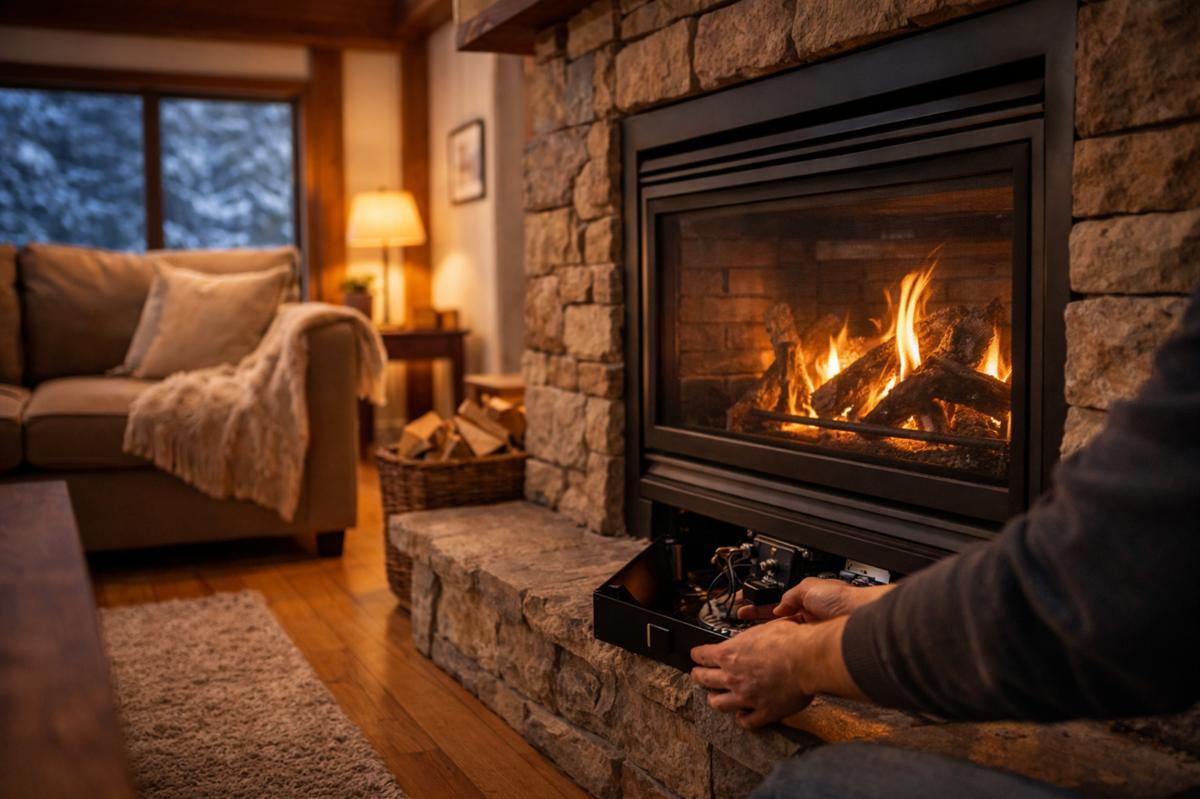
HHT Control Module SRV593-592 — Complete Installation & Troubleshooting Guide
If your gas fireplace will not ignite, will not stay lit, or refuses to respond to the wall switch or remote, the control module is one of the first parts homeowners and technicians look at. On many HHT-family fireplaces, the control module acts like the brain of the ignition system. It helps manage the startup sequence, receives control signals, and works with the rest of the ignition system to light and operate the fireplace correctly. When it fails, the symptoms can range from “nothing happens at all” to intermittent ignition, repeated shutdowns, or a fireplace that behaves unpredictably. That is why the HHT Control Module (SRV593-592) gets searched so often by homeowners trying to repair a Heatilator, Heat & Glo, or Majestic unit.
But here is the important part: a gas fireplace not igniting does not automatically mean the control module is bad. Weak batteries, loose wiring, receiver issues, poor pilot performance, weak thermopile output, and ignition-system component failures can all create symptoms that look like a bad module. This guide is designed to help you sort that out carefully and safely. We will cover what the SRV593-592 does, the signs that point toward module failure, which fireplaces use it, how to replace it, how it compares to other HHT modules, and what to troubleshoot before you spend money on a new part.
Gas appliance safety warning: If you smell gas, stop immediately. Do not try to light the fireplace, do not flip switches, do not keep troubleshooting, and do not stay in the room. Leave the area and contact your gas company or emergency services from a safe location. If you are not comfortable working on a gas fireplace, use a qualified service technician.
Not sure which part you need? Use our Parts Request Form. If you are browsing related fireplace parts on our store, always verify the exact model and existing part number before ordering.
What Does the Control Module Do?
On an electronic ignition gas fireplace, the control module coordinates key parts of the ignition and operating sequence. Depending on the fireplace design, the module may receive signals from a wall switch, handheld remote, receiver, or thermostat control. It then works with the ignition system and gas valve circuit to start the fireplace, continue operation, and respond to shutoff commands or fault conditions.
That sounds simple, but in actual operation it is doing several jobs at once. It has to interpret the call for heat, manage the ignition sequence, communicate properly with the rest of the fireplace control system, and work within the appliance’s safety logic. If that chain breaks down, the fireplace may not ignite, may start and then shut off, may fail to respond to a remote command, or may appear completely dead.
That is why homeowners searching phrases like heatilator control module, heat n glo control module, or gas fireplace not igniting often end up at the SRV593-592. It is a critical control component. But it is still only one part of the ignition chain. A failed control module can stop operation entirely, but similar symptoms can also be caused by weak batteries, bad receiver communication, poor wiring connections, thermopile issues, pilot flame issues, or a mismatch between system components. That is why accurate diagnosis matters so much on gas fireplaces.
For a DIY homeowner, the simplest way to think about it is this: if the module is the brain of the fireplace, it still depends on the rest of the body to work correctly. If the signal never reaches it, if the ignition components are weak, or if the system cannot prove flame correctly, the fireplace may behave like the module failed even when it did not.
Signs Your Control Module Needs Replacing
These are the most common symptoms homeowners notice when a control module is failing or no longer functioning correctly:
- The fireplace will not ignite at all. You call for heat and nothing happens, or the sequence never starts properly.
- The fireplace will not stay lit. It may light briefly, then shut down.
- No response from the remote or wall control. The fireplace does not react to normal control commands.
- Intermittent operation. Sometimes it works. Sometimes it does not. This is one of the most frustrating control-module-related symptoms.
- Lockout or fault behavior. The fireplace may repeatedly fail at the same point in the ignition sequence.
- The unit appears dead even though power is present. Once you have ruled out batteries, control inputs, and wiring, the module becomes a stronger suspect.
Again, these symptoms do not prove the module is bad by themselves. A homeowner searching gas fireplace not igniting or heat n glo fireplace remote not working may indeed end up needing a control module, but it is safer and smarter to troubleshoot the basics before replacing it.
Which Fireplaces Use the SRV593-592?
The HHT Control Module (SRV593-592) is used on select HHT-family gas fireplaces, including certain models under these brands:
- Heatilator
- Heat & Glo
- Majestic
That brand list is helpful, but it is not enough by itself. HHT has used multiple ignition designs and control configurations across product families. Two fireplaces from the same brand may use different modules depending on model series, ignition type, and production period. That is why you should always verify fitment by appliance model number and existing part number, not just brand name.
For a DIYer, the best search phrases are often things like:
- Heatilator control module replacement
- Heat N Glo control module SRV593-592
- Majestic gas fireplace control box replacement
- gas fireplace control module not working
If your fireplace already has an SRV593-592 installed, that is one of the strongest clues that this is the correct replacement. If you are only guessing based on brand, slow down and verify first.
Step-by-Step Replacement Guide
Important safety warning: This is a gas appliance. If you smell gas, stop, leave the area, and call your gas company. Do not attempt service when gas odor is present. If you are unsure about any step, use a qualified gas fireplace technician.
- Shut off electrical power. Unplug the fireplace or disconnect power at the circuit if applicable.
- Turn off the gas supply if the service procedure requires it. Follow the appliance service instructions carefully.
- Allow the fireplace to cool completely. Do not work around hot burner, pilot, or metal surfaces.
- Open the control compartment. Remove the lower access panel or service compartment cover.
- Take clear photos of the existing wiring. This step saves a lot of confusion later.
- Identify the old control module. Confirm that the installed part is SRV593-592 or that your documentation calls for it.
- Disconnect the old module carefully. Remove the connectors and any mounting screws or clips.
- Inspect surrounding components before installing the new module. Look for burnt wires, loose connectors, corrosion, or evidence of overheating.
- Install the new module in the correct position. Secure it as designed by the fireplace manufacturer.
- Reconnect the wiring exactly as documented. Do not guess on terminal locations.
- Restore power and test the fireplace. Verify ignition sequence, flame establishment, and response to control commands.
- Watch for abnormal behavior. If the fireplace still fails to light or stay lit, continue diagnosis instead of assuming the new module is defective.
A module replacement is often physically simple, but the danger comes from misdiagnosis or unsafe gas-appliance handling. Do not bypass safeties, do not modify the valve circuit, and do not continue repeated ignition attempts if something is clearly wrong.
SRV593-592 vs Other HHT Control Modules
One of the easiest mistakes homeowners make is assuming all HHT control modules are interchangeable. They are not. HHT has used different module types across different ignition systems.
- HHT Control Module (SRV593-592) — used on specific HHT gas fireplace systems and commonly searched when a standard control module is suspected.
- HHT IFT Control Module (SRV2326-130) — part of IntelliFire Touch systems and generally used in a different control architecture than SRV593-592.
- HHT IPI Control Module (SRV2166-338) — used on certain IPI systems and should only be used where the appliance specifically calls for it.
For DIY search intent, this matters because many people search phrases like HHT control module replacement, Heatilator module not working, or Heat N Glo ignition module without knowing there are multiple possible parts. The right question is never “Which one looks close?” The right question is “Which control module does this fireplace model actually use?”
Dexen RC control modules
Some HHT-family systems also use Dexen-based control components depending on the fireplace design. One example is the Heatilator, Heat N Glo & Majestic IPI Dexen RC Control Module (2166-347). This matters because a homeowner may search Dexen fireplace module or gas fireplace remote module and end up comparing parts that are not direct substitutes. If your fireplace is built around a Dexen RC configuration, using the wrong HHT module will not fix the problem.
Troubleshooting Before You Replace
This is the section that saves homeowners the most money. If your gas fireplace is not igniting, do not jump straight to the control module. Work through the simple and more common causes first.
1. Check the batteries first
This sounds basic because it is basic, but weak batteries cause a surprising number of “dead fireplace” complaints. Depending on the system, you may have batteries in the remote, in the receiver, or in a battery backup pack. If the batteries are weak, the fireplace may not respond to the remote, may behave erratically, or may fail to start the sequence properly.
DIY search phrases here are often:
- gas fireplace remote not working
- Heat N Glo remote not responding
- Heatilator fireplace won’t turn on with remote
Before blaming the module, install fresh batteries everywhere the system uses them.
2. Inspect the wiring and connectors
Loose spade terminals, oxidized connections, pinched wires, burnt insulation, and partially disconnected harnesses can all create symptoms that look like a failed control module. If the module is not getting the right signal, or cannot send the right signal onward, the fireplace may appear completely unresponsive.
Look for:
- Loose or half-seated plugs
- Corrosion on terminals
- Heat-damaged wire insulation
- Signs of arcing or burnt connection points
- Wires rubbed through on sheet metal edges
A bad connection is cheaper and easier to fix than a bad control module, so do not skip this step.
3. Check the thermopile first
You specifically asked for this to be included, and it should be. In many real-world gas fireplace service calls, a weak thermopile or thermopile-related problem is more common than a failed control module. If the thermopile is not producing strong output, the system may fail to open the valve correctly, fail to sustain operation, or behave like the control module is not doing its job.
Common DIY search phrases include:
- gas fireplace won’t stay lit thermopile
- Heatilator pilot lights but burner won’t come on
- Heat N Glo fireplace pilot on but no main burner
If the pilot flame is weak, poorly aimed, or not heating the thermopile properly, the fireplace may never run correctly even with a brand-new control module installed.
4. Check pilot flame quality
A weak, unstable, or poorly shaped pilot flame can create all kinds of misleading symptoms. If the pilot is not robust enough to heat the thermopile or prove flame properly, the system may shut down, refuse to open the main burner, or cycle unpredictably.
Look for:
- Small or lazy pilot flame
- Pilot flame not contacting the thermopile correctly
- Dirty pilot assembly
- Partial blockage in the pilot orifice
This is one of the reasons homeowners search gas fireplace not igniting and land on a control module page when the real issue is the pilot system.
5. Confirm remote and receiver communication
If your fireplace does not respond to the remote, the issue may be in the receiver, pairing, wiring, or control input rather than the module itself. Some ignition systems are highly dependent on proper communication between the handheld control and receiver components. A failed or unpaired receiver can make the fireplace seem dead even when the control module is fine.
That is especially important when troubleshooting systems related to IntelliFire Touch or Dexen RC-style controls.
6. Look for repeated sequence failure patterns
Pay attention to what the fireplace does before it fails. That pattern can tell you a lot.
- If nothing happens at all, start with batteries, receiver, power, and wiring.
- If the fireplace starts the sequence but never lights, look hard at ignition, pilot, and gas-supply-related issues.
- If it lights briefly and then shuts off, think about flame proving, thermopile performance, and related sensing issues.
- If it works intermittently, loose wiring, weak batteries, or a failing module are all possible.
This kind of symptom-based thinking is far more useful than replacing parts at random.
7. Consider the control module after the basics are ruled out
Once you have ruled out batteries, remote/receiver issues, wiring problems, weak pilot performance, and thermopile-related problems, the module becomes a stronger suspect. At that point, replacing the SRV593-592 is much more reasonable.
That order matters. It is the difference between smart diagnosis and expensive guessing.
Common Search Terms a DIYer Uses for This Problem
Homeowners usually do not search by part number first. They search by symptom. If you are trying to diagnose your fireplace, these are the kinds of phrases that usually point back to control-module and ignition-system problems:
- gas fireplace not igniting
- Heatilator fireplace won’t start
- Heat N Glo fireplace not working
- gas fireplace won’t respond to remote
- gas fireplace pilot on but won’t light burner
- Majestic fireplace control module
- Heatilator control module replacement
- Heat N Glo control module SRV593-592
- fireplace control box replacement
- gas fireplace intermittent ignition
If that is how you found this page, start with the troubleshooting steps above before assuming the module itself is bad.
Common Replacement Control Modules
- HHT Control Module (SRV593-592)
- HHT IFT Control Module (SRV2326-130)
- HHT IPI Control Module (SRV2166-338)
- Heatilator, Heat N Glo & Majestic IPI Dexen RC Control Module (2166-347)
If you are comparing these parts, remember that they are not interchangeable just because they are all control modules. Exact model matching matters.
FAQ: HHT Control Module SRV593-592
What does the HHT Control Module SRV593-592 do?
It manages key ignition and operating functions on certain HHT-family gas fireplaces, including communication with the ignition sequence and control system.
What are the signs of a bad fireplace control module?
Common signs include no ignition, intermittent operation, no remote response, shutdown after lighting, and repeated sequence failures once simpler causes have been ruled out.
Will a bad control module keep my gas fireplace from igniting?
Yes, it can. But batteries, wiring, receiver issues, thermopile problems, and pilot problems can cause very similar symptoms, so those should be checked first.
Is SRV593-592 the same as SRV2326-130?
No. They are different HHT control modules used in different fireplace systems. Always match the exact model and part number.
Can I replace an HHT control module myself?
Some homeowners can handle the mechanical side of replacement, but this is still a gas appliance. If you are unsure about wiring, ignition sequence, or gas-system safety, use a qualified technician.
What should I check before replacing the module?
Check batteries, wiring, receiver and remote communication, pilot performance, and thermopile-related performance first. The module should not be the first part you blame without a basic diagnosis.
Not sure which part you need? Use our Parts Request Form.